
Prompting is a core part of special education instruction, but without a clear system, it can quickly lead to student prompt dependence. Teachers and paraprofessionals often want to help, yet too much support can unintentionally slow student independence.
In many classrooms, teachers face the challenge of balancing the need to support their students with the need to foster independence. The approach to prompting can greatly influence a student’s ability to learn and apply new skills. For example, a student learning to tie their shoes might initially require step-by-step guidance. As they progress, the teacher can provide fewer cues, empowering the student to complete the task independently.
When educators incorporate a prompt hierarchy visual, it serves as a constant reminder of how to support students effectively. This tool is not only beneficial for the students but also for the educators themselves to remain consistent in their prompting strategies. Consider a classroom where multiple staff interact with the same students; having a clear visual guide helps everyone stay on the same page, ensuring that all students receive the same level and type of support.
That is why having a prompting hierarchy visual is so important. This free visual gives educators a clear, consistent reference for how to prompt effectively while still encouraging students to do as much as possible on their own.
The prompt hierarchy in aba therapy is designed to be intuitive and user-friendly. It not only outlines the levels of prompting but also allows for quick reference during instruction. For instance, if a teacher is unsure whether to give verbal prompts or to wait for a student to attempt a task independently, they can quickly consult the visual for guidance. This is especially valuable in fast-paced classroom environments where time is of the essence.
Students learn to approach tasks with the confidence and work towards independence that they can succeed without immediate adult support. For example, if a student practices math problems using a visual aid, they might first solve problems with adult guidance but gradually shift to working independently with the same aid.
As students gain skills and confidence, they start to believe in their abilities. For instance, a student who practices daily with the visual may ultimately feel empowered to tackle more complex tasks, such as group projects, without relying heavily on adult input.
Generalizing skills becomes easier when students experience consistent support across different settings. This could mean applying skills learned in the classroom during a community outing, like using their communication skills to order food at a restaurant.
A prompt hierarchy is an ordered system of support that moves from least intrusive to most intrusive prompts. The goal is to provide only the level of help a student needs to be successful and then fade that support over time. This is called prompt fading strategies.
Consistency in expectations helps students know what to expect from their educators. For example, if every staff member uses the same prompting strategy, students can navigate their learning environment with greater ease and security.
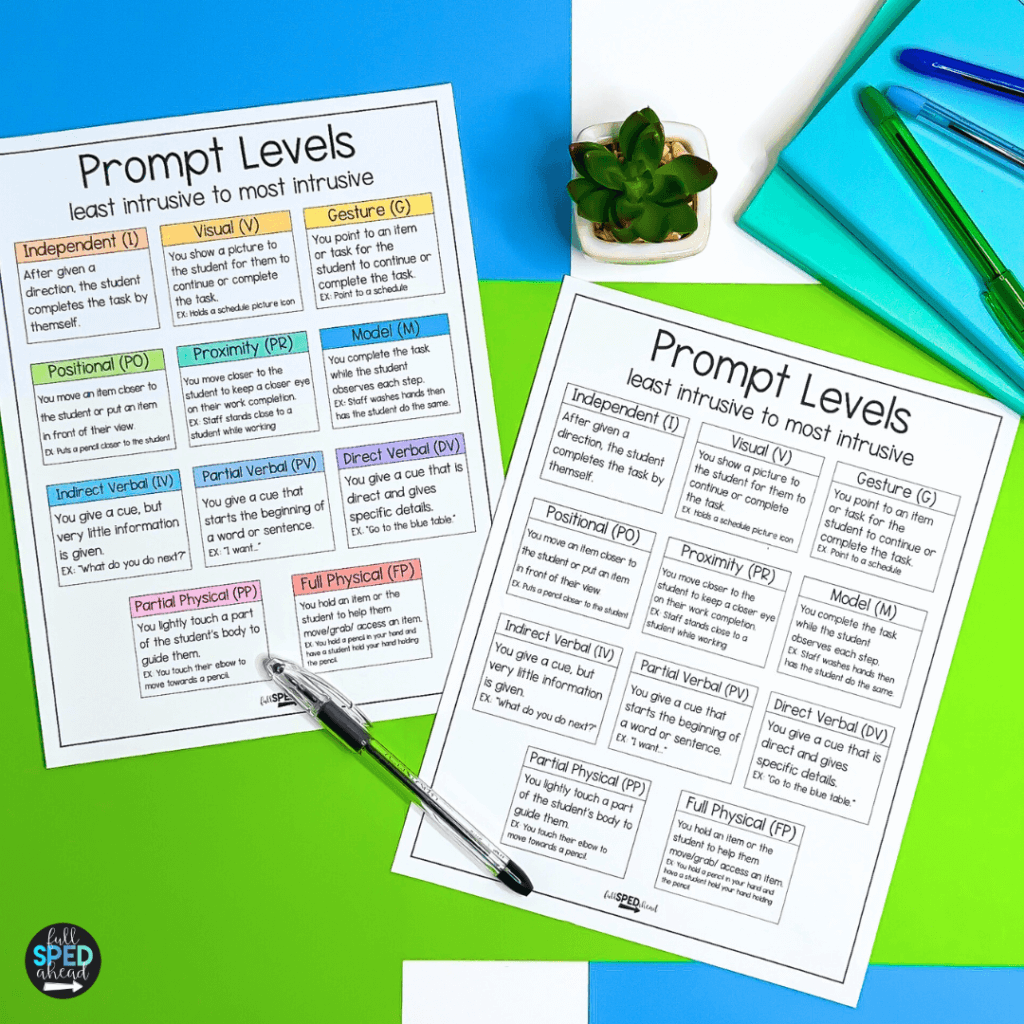
Implementing a prompt hierarchy visual not only aids students but also serves as a professional development tool for staff. Training sessions can be conducted using the visual, allowing educators to align their prompting methods while discussing case studies or student experiences. This collaborative approach enhances the overall effectiveness of the instructional staff.
For instance, educators can role-play various scenarios using the prompt hierarchy visual. By simulating real-life interactions, they can practice determining when to fade prompts and how to respond to student needs dynamically. This hands-on experience is invaluable for developing a strong team approach to prompting.
Incorporating visuals in lessons has been shown to enhance retention and understanding. For example, students who utilize a prompt hierarchy visual while learning new concepts, like science experiments, may recall steps more effectively when prompted consistently.
The effective use of prompt fading is another critical aspect of the intervention. As students demonstrate understanding and capability, teachers can gradually reduce their level of support. An example could be guiding a student through a writing assignment initially, then allowing them to draft independently as they gain confidence in their writing skills.
Improving data accuracy is paramount for tracking student progress. By following a consistent prompting framework, educators can collect more reliable data on how students respond to support levels and adapt their instruction accordingly. Such data can be instrumental in determining the effectiveness of different teaching strategies.
Additionally, the visual can be adapted for various subjects. For example, in a reading class, educators can outline different prompts for reading comprehension exercises, allowing students to transition from guided reading to independent reading more seamlessly.
The prompt hierarchy visual is a dynamic tool that can evolve with the needs of the classroom. It can be updated based on feedback from educators and students, making it a living document that grows alongside the instructional environment.
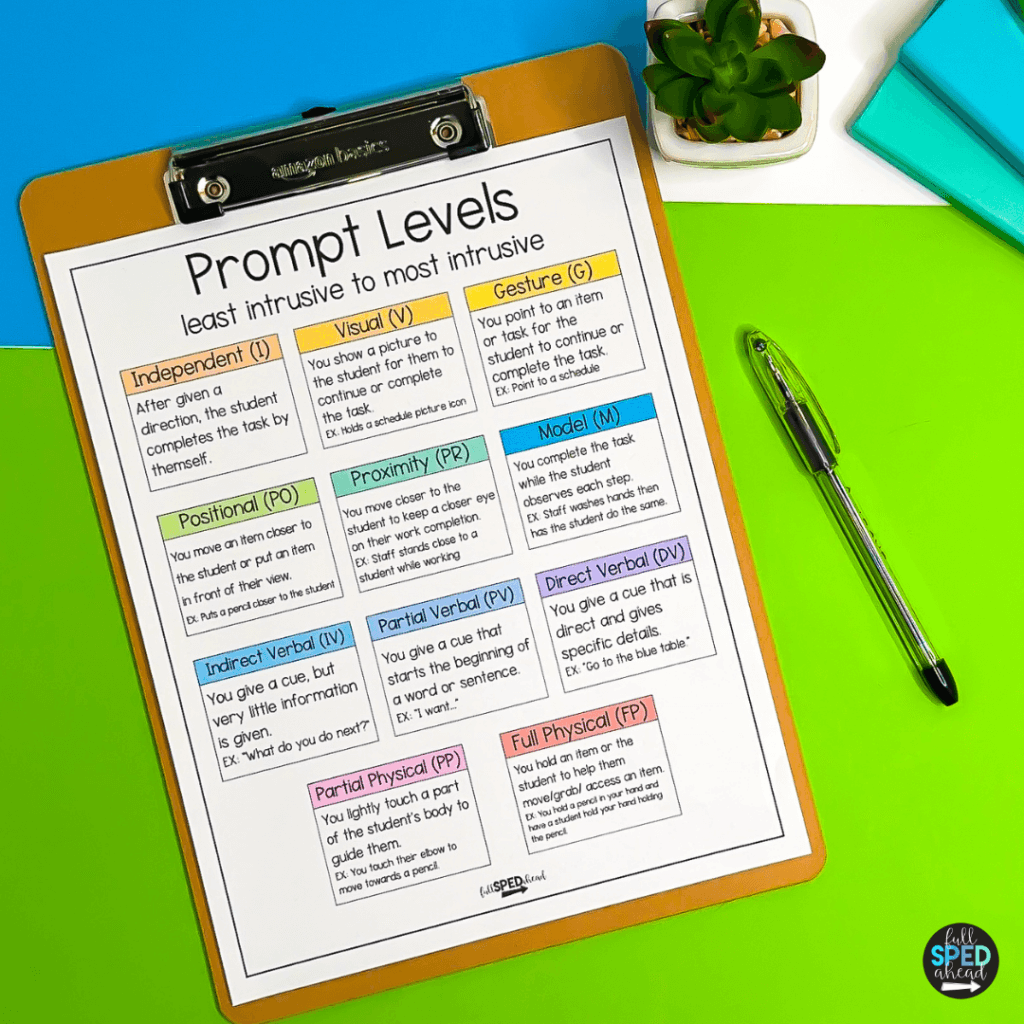
Visual supports reduce confusion for both students and staff. A prompt hierarchy visual makes expectations clear and easy to reference during instruction.
When everyone uses the same system, students receive clearer instruction.
This free email opt in resource is designed to be simple, clear, and classroom ready. It works across grade levels, ability levels, and instructional settings.
Using the prompt hierarchy visual effectively requires thoughtful planning and intentional use. To achieve this, educators should regularly review the visual to ensure its relevance and applicability to the current class dynamics. Frequent discussions among staff regarding its use further ensure that it remains a central part of teaching strategies.
This resource is meant to be used daily, not stored away in a binder. Posting and referencing the visual helps staff use prompts intentionally.
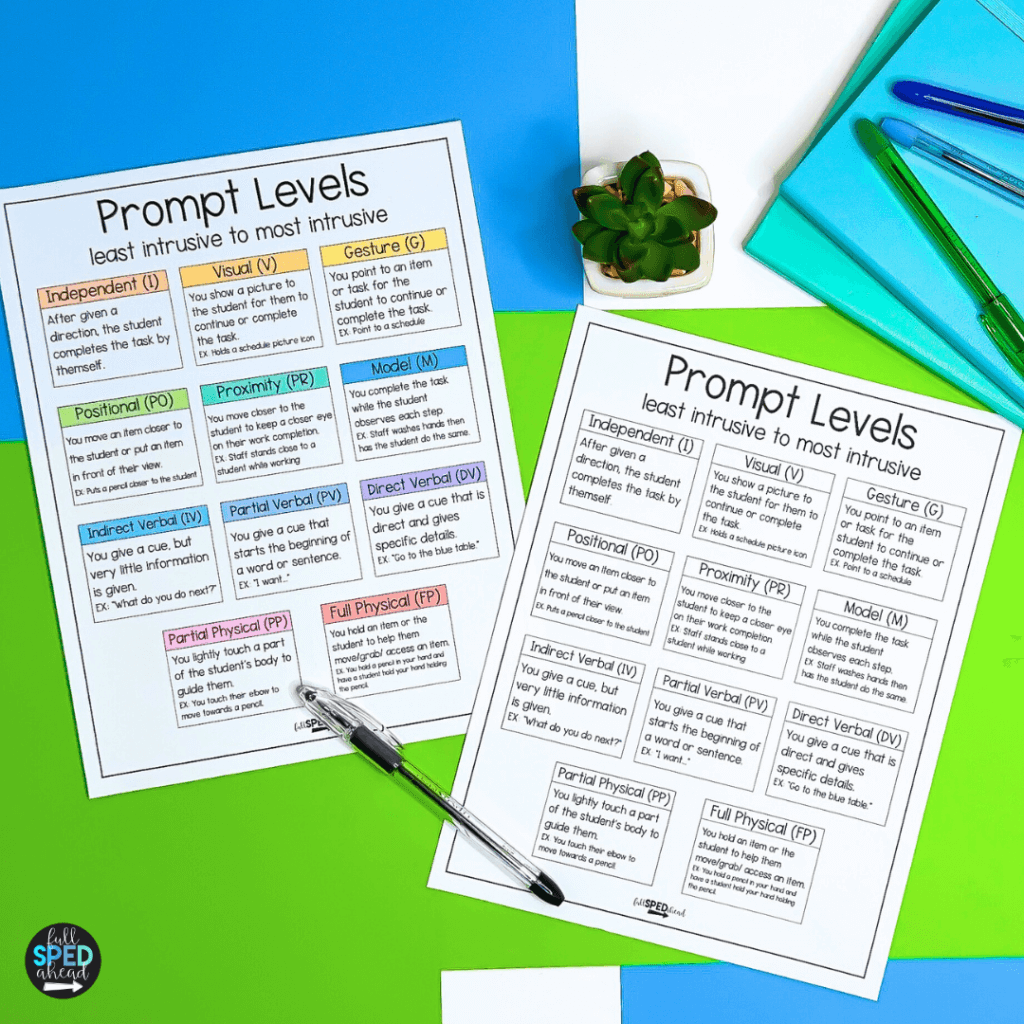
Prompting levels are often part of IEP goals, especially goals focused on independence and functional skills. A prompt hierarchy visual helps teams use consistent language and expectations.
By considering how the prompt hierarchy visual might support specific IEP goals, educators can tailor their approaches to meet the diverse needs of their students. For example, a student with a goal focused on building social skills might use the visual to learn how to initiate conversations or ask for help effectively.
Moreover, incorporating student feedback regarding the visual can enhance engagement. For instance, students might suggest modifications that make the visual more user-friendly for them, such as using symbols or colors that resonate with their learning styles.
If you want a simple, effective way to support independence and align prompting practices across your classroom team, this free visual is a great place to start.
This resource is perfect for special education teachers who want clearer systems, stronger independence skills, and more consistent instruction. Start today and see the difference the prompt hierarchy visual can make in your classroom.
