
Task analysis is a proven teaching strategy in special education that breaks down complex skills into smaller, more manageable steps. By focusing on these smaller steps, teachers can provide students with a clear and systematic approach to learning new skills. From life skills like handwashing to academic tasks like solving math problems, task analysis helps students master skills at their own pace while building independence and confidence.
As educators, it is essential to incorporate task analysis in every lesson to enhance student understanding. To effectively incorporate task analysis, teachers must first identify the specific skills to be taught.
In this blog post, we will explore understanding task analysis, its importance in a special education setting, and practical ways to incorporate task analysis into your daily classroom routine.
Understanding how to incorporate task analysis can greatly improve student outcomes in various subjects.
When educators incorporate task analysis, they provide step-by-step guidance for students.
Task analysis is the process of identifying and outlining the individual steps required to complete a specific task. It involves breaking down a skill into smaller, teachable components and then teaching each step systematically. For example, the task of brushing teeth can be broken down into steps such as picking up the toothbrush, applying toothpaste, brushing each section of the mouth, rinsing, and putting away the toothbrush.
This approach works well for students who struggle with multi-step tasks by providing them with a clear roadmap and consistent practice to achieve mastery. Board Certified Behavior Analysts use task analysis in ABA therapy to acheive their goals to help students and adults.
Teachers can use various methods to incorporate task analysis effectively in their classrooms. To promote independence, it’s crucial to incorporate task analysis into daily lessons.

Implementing task analysis enables students to complete tasks on their own by teaching them step-by-step instructions. With time and practice, students learn to complete these steps without prompting, fostering greater independence.
One practical way to incorporate task analysis is through structured morning routines.
Using visuals can greatly aid in how you incorporate task analysis in morning routines.
Each student’s needs and abilities vary. Task analysis allows teachers to adapt and tailor instruction based on individual learning styles and IEP goals.
To teach academic skills, educators need to incorporate task analysis to simplify complex problems.
By focusing on one small step at a time, students experience more success and fewer frustrations. This approach builds confidence and encourages continued effort.
Students can apply the skills they learn through task analysis to various settings and situations, making it a valuable tool for life skills, academics, and social interactions.
Teachers find that when they incorporate task analysis, students engage better in social skills practice.
In centers, it’s beneficial to incorporate task analysis for practice in a structured environment.
One of the easiest ways to integrate task analysis is through morning routines. Create a visual schedule that outlines each step of the routine, such as unpacking a backpack, placing belongings in a cubby, and sitting at a designated spot. Use visual supports or verbal prompts as needed, gradually fading them as students gain independence.
Task analysis can be applied to teaching academic skills, such as solving a math problem or completing a writing assignment. Break down tasks into smaller steps, such as identifying the problem, writing down the numbers, and solving one operation at a time. Provide checklists to help students track their progress through the steps.
Teaching complex skills is a core component of special education, and task analysis is the perfect tool for breaking down these essential tasks. For example:
Task analysis is also effective for teaching social skills. For example, greeting a peer can be broken into steps: making eye contact, saying “Hi,” and smiling. Use role-playing and visuals to reinforce these steps.
Set up task-specific centers in your classroom, such as a life skills center or an academic center. Each center can focus on teaching one skill incorporating task analysis. Provide students with step-by-step instructions and allow them to practice independently or with minimal assistance.
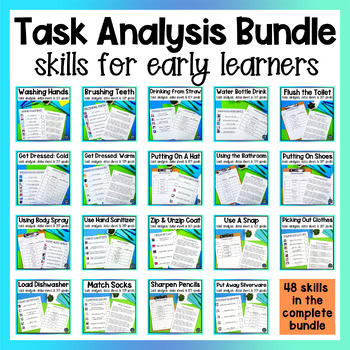
Visuals are a powerful tool for task analysis. Create visual schedules, checklists, or step-by-step picture guides to help students understand and complete tasks independently.
Incorporate task analysis into daily routines to reinforce skills. Repetition helps students internalize the steps and master tasks more effectively.
Begin with tasks that are achievable for the student and gradually increase complexity as they gain confidence and proficiency.
Keep data on each student’s performance for each step of the task. Use this information to adjust instruction and provide targeted support where needed.
Incorporate task analysis into your strategies for a more effective and engaging classroom.
It’s clear that educators who incorporate task analysis create a positive learning environment.
Acknowledge and celebrate milestones, no matter how small. Positive reinforcement motivates students and builds confidence.
Examples of Task Analysis in Action
For students, task analysis builds confidence, independence, and the ability to generalize skills across different settings. For teachers, it provides a structured approach to instruction, simplifies data collection, and ensures that IEP goals are being systematically addressed. Task analysis creates a win-win environment where students and teachers thrive together.
In summary, to truly enhance student learning, you must incorporate task analysis effectively in your teaching.
Start small by identifying one skill or routine to break down using task analysis. With consistent practice, visual supports, and a commitment to individualized instruction, you’ll see your students flourish as they build confidence and independence one step at a time.
How to Use Task Analysis to Teach Life Skills in Special Education
Teaching Functional Life Skills: The Foundation for Independence in Special Education

