
Teaching life skills is an essential part of special education, helping students gain the independence they need to navigate daily life. However, for many students with disabilities, mastering these skills can feel overwhelming. That’s where task analysis comes in. Task analysis is a teaching strategy that breaks down complex skills into smaller, more manageable steps, making the learning process clear and achievable. In this blog post, we’ll explore how task analysis works, why it’s so effective, and practical ways to implement it in your special education classroom.
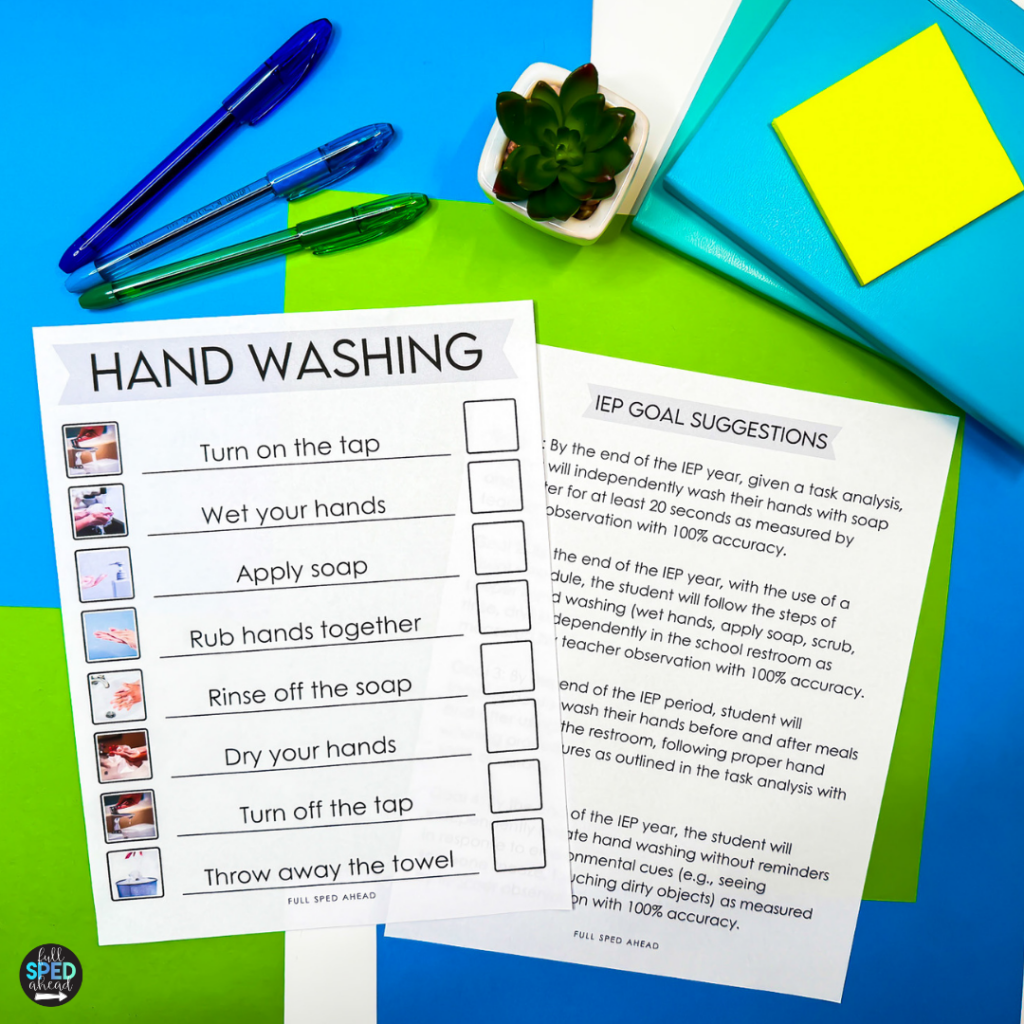
Task analysis is the process of breaking down a skill into a sequence of smaller steps that a student can learn one at a time. This method helps students focus on one part of the skill at a time rather than becoming overwhelmed by the entire task.
For example, teaching a student how to brush their teeth might involve steps such as:
Each of these steps is taught individually and sequentially until the student masters the entire process. By breaking tasks into smaller parts, task analysis ensures that every student, regardless of their ability level, can experience success. You can even have a task analysis for washing dishes!
1. Promotes Independence
Task analysis empowers students to complete tasks independently by providing a clear, step-by-step roadmap. This builds confidence and fosters self-reliance, key components of independence.
2. Addresses Individual Needs
Every student learns differently, and task analysis allows teachers to tailor instruction to each learner’s unique needs. For example, some students may require additional visual supports or physical prompts for certain steps, while others may need verbal reminders.
3. Tracks Progress
Task analysis makes it easier to monitor student progress. By tracking which steps a student has mastered and which ones require more practice, teachers can adjust instruction to focus on specific areas of need.
4. Reinforces Success
Breaking tasks into smaller steps allows students to experience success more frequently, which can motivate them to continue learning. Each mastered step is a victory that builds momentum toward achieving the full skill.
Step 1: Identify the Skill
Choose a life skill that is meaningful and relevant to your students’ daily lives. This might include self-care tasks like getting dressed, vocational tasks like sorting mail, or household chores like setting the table.
Step 2: Break the Skill into Steps
Observe the task and write down each step required to complete it. Be as detailed as possible, and remember that even small actions, like opening a container or turning a knob, may need to be included.
Step 3: Assess the Student’s Baseline
Determine which steps the student can already complete independently and which ones require support. This baseline assessment will guide your instruction and help you track progress over time.
Step 4: Choose a Teaching Method
There are several ways to teach the steps of a task:
Step 5: Provide Visual Supports
Visual supports, such as picture schedules or step-by-step guides, can be incredibly helpful for students with disabilities. These tools provide a clear visual reference that students can follow as they complete the task.
Step 6: Practice and Reinforce
Provide opportunities for repeated practice, and offer positive reinforcement for each successful step. Celebrate small victories to keep students motivated and engaged.
Check out this resource of task analysis bundles.
Teaching students to make a simple meal, like a sandwich, can be broken into steps such as:
For personal hygiene tasks like washing hands, steps might include:
For tasks like sharpening pencils, steps could include:
Task analysis is a powerful tool for teaching life skills in special education. By breaking tasks into smaller, manageable steps, it ensures that all students can experience success and gain the independence they need to thrive. Whether you’re teaching cooking, hygiene, or classroom jobs, task analysis provides a clear and structured approach to skill-building.
Ready to implement task analysis in your classroom? Start small, be consistent, and watch your students achieve milestones they never thought possible! Check out this resource of task analysis bundles.
Read more about life skills:
Life Skills for Middle School Students
How a School Store Teaches Life Skills

