
One of the most effective strategies for teaching independence in a special education classroom is task analysis. For students with disabilities, completing a multi-step activity can feel overwhelming. How to use task analysis skills helps students break larger skills into smaller, manageable steps, making it easier for students to learn, practice, and eventually master functional life skills.
Whether you’re teaching how to wash hands, cook a simple recipe, or manage money, task analysis provides a roadmap that helps students gain confidence while building independence. In this post, we’ll explore what task analysis is, why it’s so powerful, and how you can use it to teach real-world life skills in your classroom. If you’re curious how to use task analysis, keep reading!
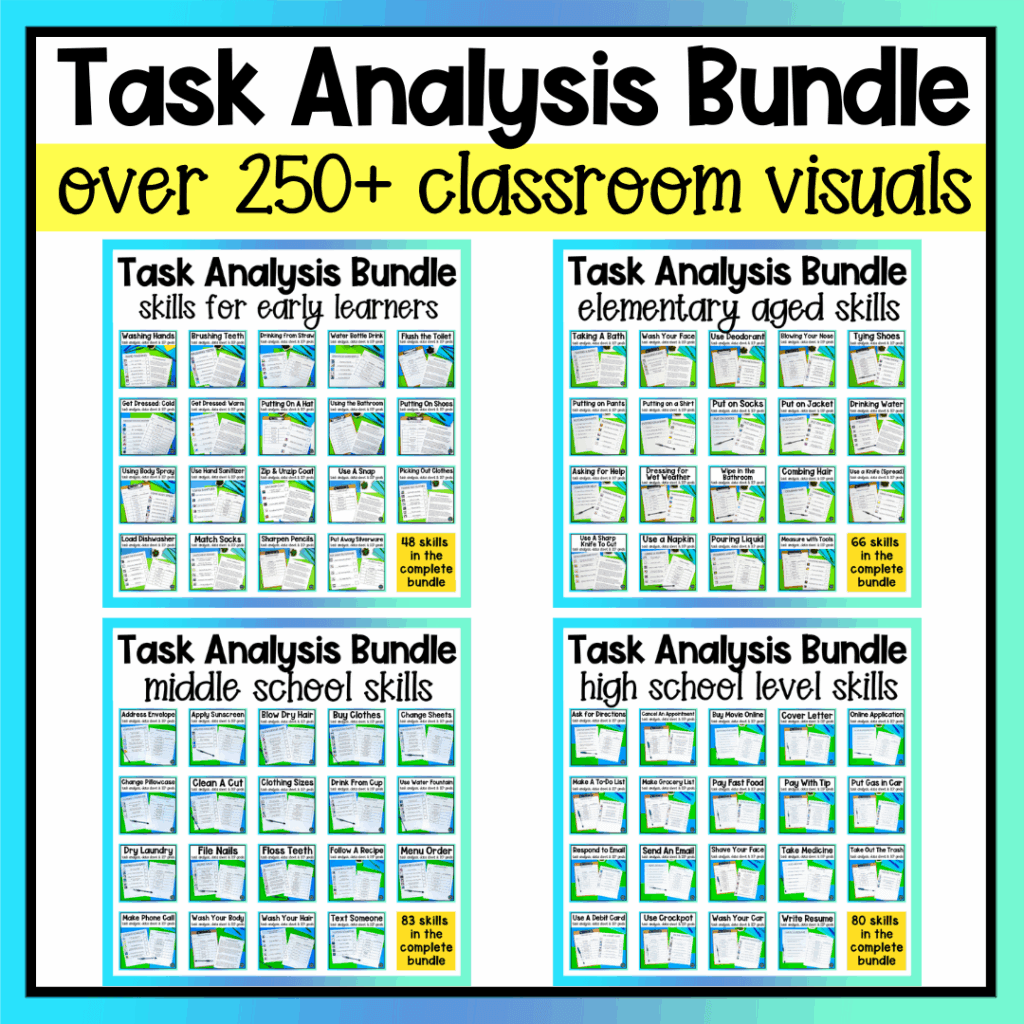
Task analysis is the process of breaking down a complex skill into smaller, sequential steps that can be taught one at a time. Instead of asking a student to “make a sandwich,” for example, you might outline each step:
Students with disabilities often benefit from explicit instruction and structure.
Tasks like brushing teeth, washing hands, or using deodorant can be broken into small steps. A visual task analysis checklist can serve as a daily reminder and help students increase independence in self-care.
Cooking involves many steps: gathering ingredients, measuring, mixing, and cleaning up. Using a task analysis for simple recipes like making toast or mixing a salad gives students the chance to practice functional skills they’ll use throughout their lives.
👉 For a ready-to-use option, check out my Cooking Task Analysis Bundle with step-by-step visuals.
Skills like vacuuming, folding laundry, or wiping down tables can be taught through structured steps. Task analysis ensures students know the correct order and practice until routines become automatic.
👉 My Domestic Cleaning Skills Task Analysis includes templates for common household chores.
Dressing, putting away clothes, or sorting laundry are essential daily living skills. Task analysis helps students become more independent in choosing weather-appropriate clothing and managing their wardrobe.
👉 Try my Clothing Management Task Analysis for step-by-step supports.
From checking out at a store to clocking in for work, real-world vocational skills require practice and structure. Breaking down tasks like “buying groceries” into manageable steps teaches students the routines they’ll need in adulthood.

Visuals make task analysis even more effective. Pictures, icons, or step-by-step charts can guide students through a routine with less verbal prompting. You can laminate and post visuals in the bathroom, kitchen, or classroom to provide built-in reminders.
Another major benefit of task analysis is that it lends itself perfectly to progress monitoring. You can record whether each step was completed independently, with a prompt, or not at all. Over time, you’ll see progress as students move from needing assistance to completing steps independently. This not only helps with instruction but also provides concrete data for IEP meetings. If you’re curious how to use task analysis, keep reading!
Task analysis is one of the most powerful tools in a special education classroom. By breaking down real-world life skills into manageable steps, you help students gain confidence, build independence, and develop the functional skills they need for daily living and future success. We hope that you’ve learned more about how to use task analysis in your classroom.
Whether you’re teaching hygiene, cooking, cleaning, or vocational routines, task analysis creates structure and consistency that empowers your students.

