
Prompting is a daily part of instruction in special education, essential for fostering student development and learning. Grab your very own free prompt hierarchy. Without a clear system, prompting can become inconsistent, overused, or difficult to fade, ultimately hindering student independence and progress. Educators must be mindful of their prompting strategies to ensure they effectively support each student’s unique needs.
This free Prompt Hierarchy provides educators and paraprofessionals with a shared framework for supporting students while simultaneously promoting independence. By utilizing this resource, teams can use prompts intentionally and strategically, making educational experiences more effective and fulfilling.
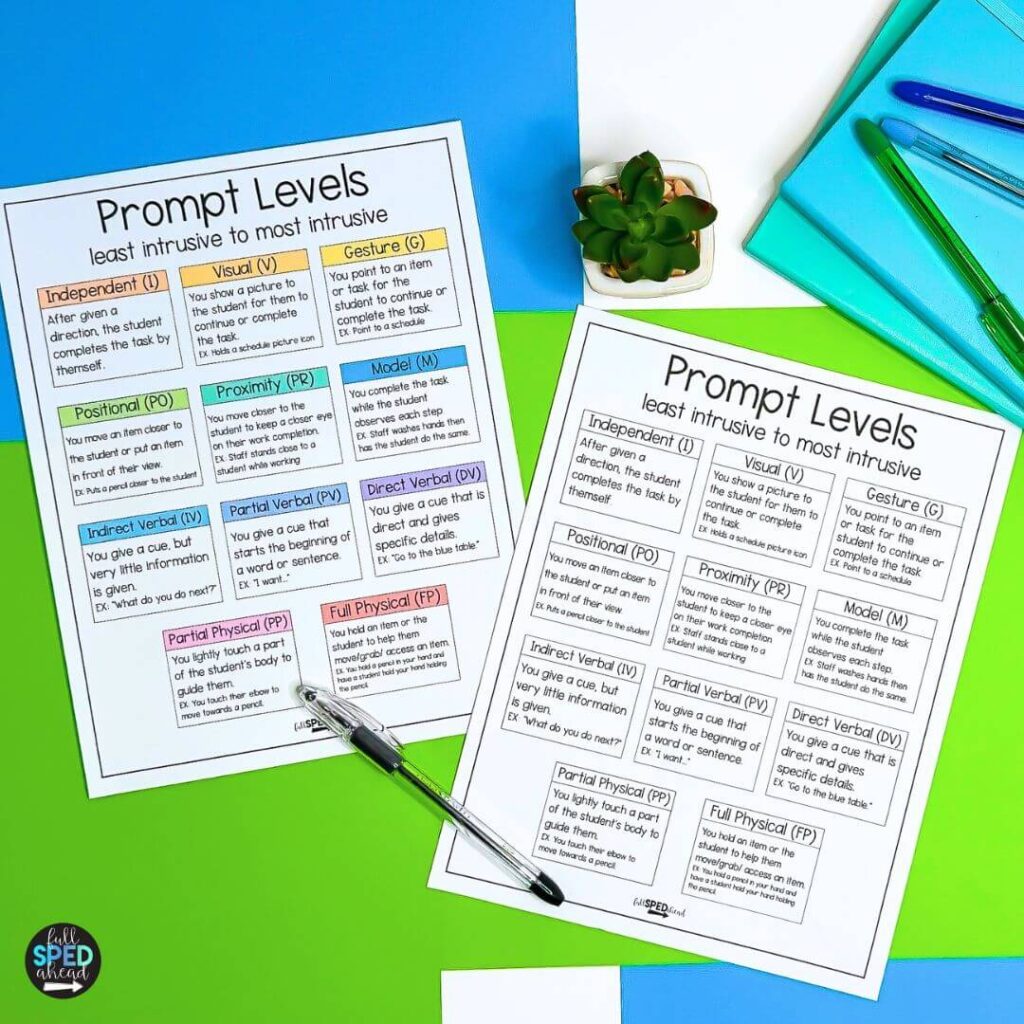
Students learn best when support is predictable and consistent. A well-structured prompt hierarchy helps adults know how and when to provide support without doing the task for the student, thereby encouraging active participation and engagement in learning activities.
Implementing a prompt hierarchy is crucial for ensuring that students not only receive the right level of support but also learn to rely on themselves as they progress. The effectiveness of this strategy is evident in various educational settings, where teachers report increased student motivation and self-efficacy.
As an example, consider a student struggling with reading comprehension. By gradually reducing the level of prompting from providing extensive verbal cues to offering only visual supports—educators can empower the student to develop their skills independently. This method not only aids in retention but also builds confidence in their abilities.
Another benefit of a prompt hierarchy is that it contributes to the consistency of instruction across staff. When all educators understand and implement the same prompting strategies, students are less likely to experience confusion, leading to a more cohesive learning environment.
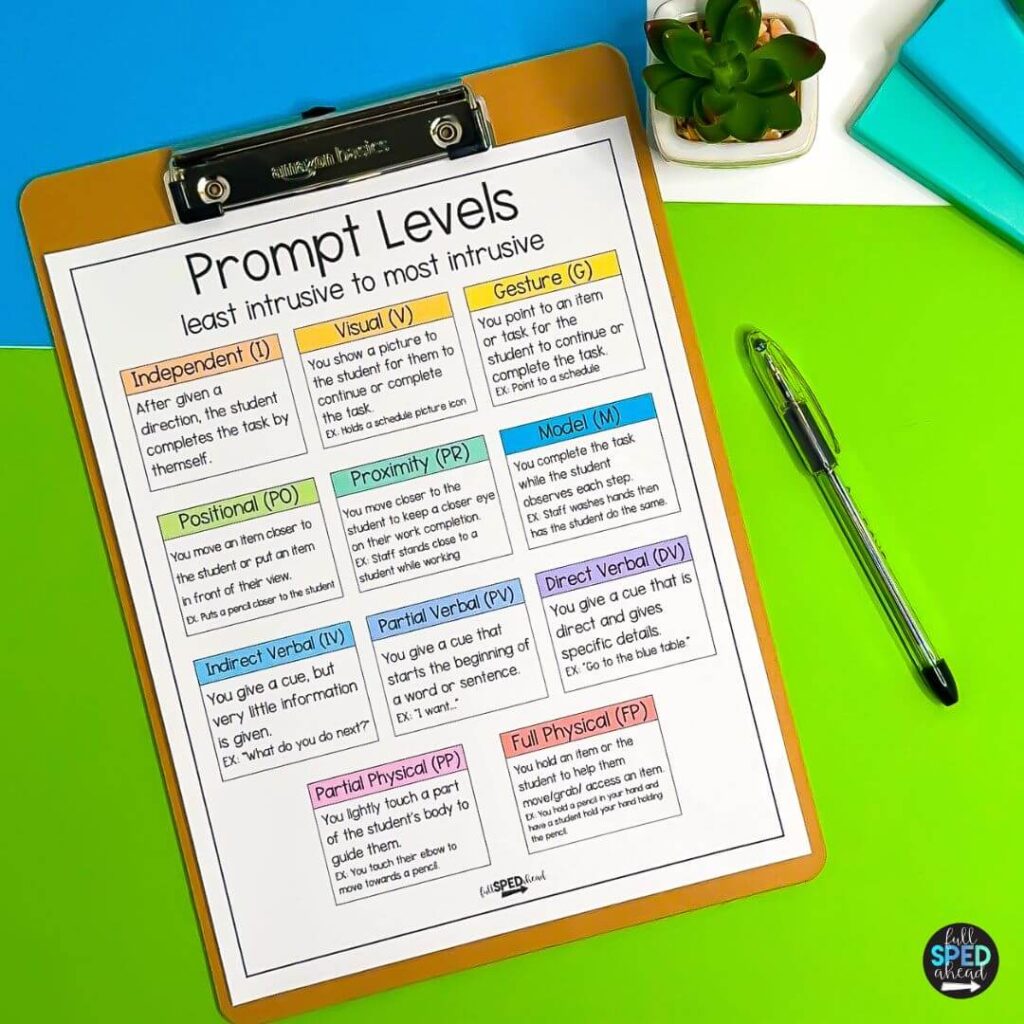
A free prompt hierarchy is an ordered list of prompts that range from least intrusive to most intrusive. The goal is to provide only the level of support a student needs to be successful, with the ultimate aim of promoting their independence and confidence in a learning environment.
For instance, visual prompts are prompts that can be particularly effective for students who are visual learners, while verbal prompts may benefit those who respond better to auditory cues. The ability to select the most effective type of prompt can significantly enhance student learning outcomes.
A prompt hierarchy is an ordered list of prompts that range from least intrusive to most intrusive. The goal is to provide only the level of support a student needs to be successful.
Additionally, modeling is a powerful form of prompting that allows students to see the expected behavior or task completion. When educators demonstrate a skill, it provides a clear example for students to follow, making it easier for them to replicate the behavior.
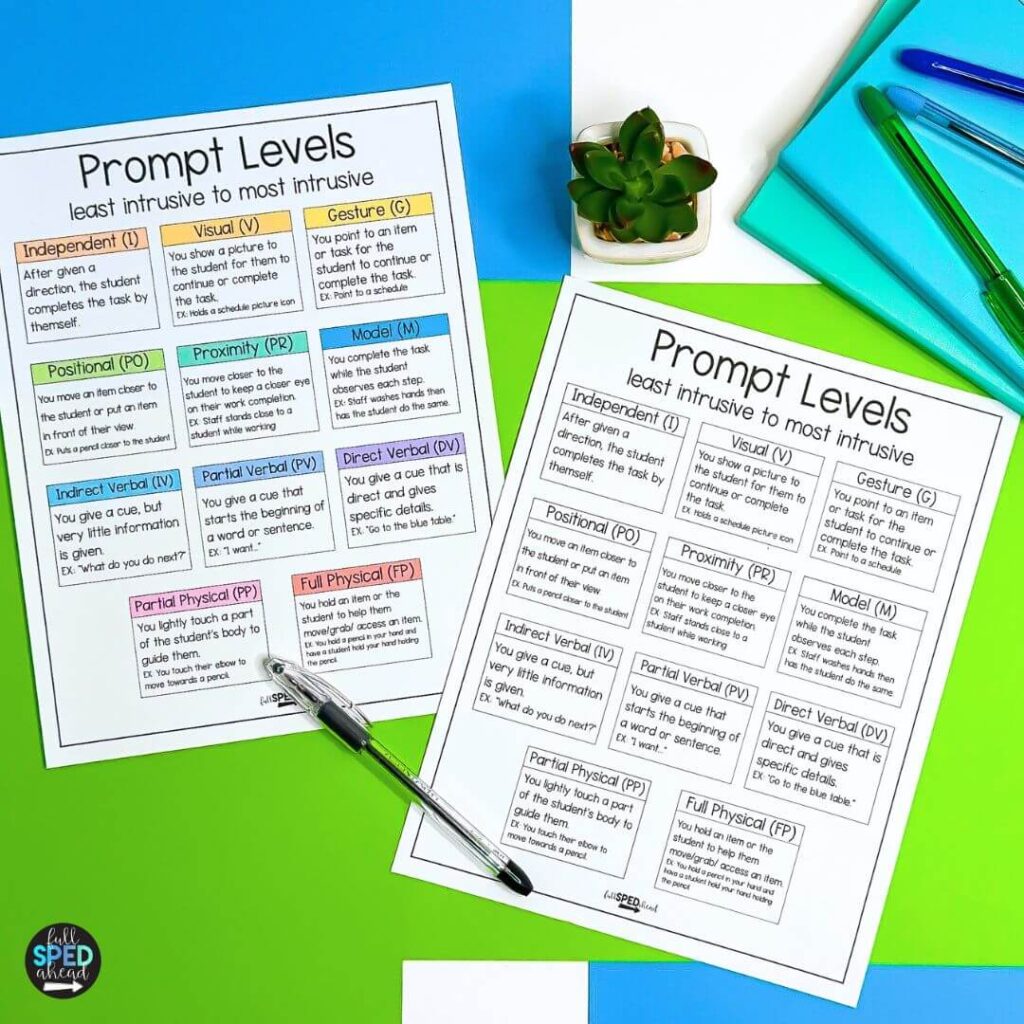
Common types of prompts include:
This free prompt hierarchy is designed to be simple and classroom-friendly, making it an excellent tool for teachers, paraprofessionals, and related service providers to implement effective prompting strategies. By equipping educators with practical tools, the prompt hierarchy resource ensures that all staff members can support students in a cohesive manner, ultimately leading to better learning experiences.
One of the standout features includes a clear visual to use the prompting hierarchy chart, which can be easily referenced during instruction. This chart serves as a visual reminder for educators to implement the correct level of prompting based on student response.
Additionally, the resource provides student-friendly and staff-friendly language, ensuring that both students and educators can easily understand and utilize the prompts provided. The format is designed to be easy to post or reference, making it accessible for quick consultations during lessons or activities. This convenience helps to reinforce the consistent implementation of prompts across different settings.
To maximize the effectiveness of a prompt hierarchy, consider integrating it into various aspects of classroom instruction:
1. During staff and paraprofessional training: Ensuring all staff members are familiar with the hierarchy can lead to more effective collaboration and support for students.
Prompts should be taught and referenced regularly. When everyone uses the same system, students experience clearer expectations, which can lead to improved learning outcomes and greater student engagement.
2. Posted in instructional areas: Having visual reminders available in the classroom can help staff and students remember the hierarchy and apply it consistently.
3. When planning IEP-aligned instruction: This resource can be a pivotal part of developing individualized education plans, ensuring that appropriate supports are in place for each student.
4. While collecting prompting data: Tracking the effectiveness of prompts can help educators adjust their strategies to meet student needs more effectively.
5. As a reminder to fade prompts over time: Regularly assessing each student’s progress will allow educators to determine when to reduce prompting, fostering greater independence in learners.
Prompts should be taught and referenced regularly. When everyone uses the same system, students experience clearer expectations.
Try using this resource:
The skills that this resource helps students practice extend across various domains, promoting overall development and growth.
1. Initiating tasks: Encouraging students to start assignments on their own can significantly enhance their learning experience and build their confidence.
2. Completing skills with reduced support: As students grow more proficient, the goal is to have them complete tasks with minimal assistance, fostering their independence.
3. Building confidence: Successfully completing tasks can boost students’ self-esteem, empowering them to take on new challenges.
4. Generalizing skills across settings: Learning to apply skills in various environments ensures students are well-prepared for real-world situations.
5. Developing independence: Ultimately, the goal of a prompt hierarchy is to cultivate independence in students, enabling them to thrive outside of the classroom.
Using a free prompt hierarchy supports more than academic instruction; it builds functional and independence skills throughout the school day. This comprehensive approach ensures that students are equipped with the necessary tools for success both in and out of the classroom.
Intentional prompting encourages educators to reflect on their practices and select the least intrusive support first, allowing students to engage with content more meaningfully. This reflective practice is essential for continuous improvement in teaching methods.
A shared free prompt hierarchy also fosters collaboration among educators, creating a unified approach to supporting student learning. This collaboration can help address individual student needs more effectively and enhance overall classroom dynamics. Using a prompt hierarchy supports more than academic instruction. It builds functional and independence skills across the school day.
Utilizing this prompt hierarchy can transform how educators approach support strategies, leading to improved educational outcomes for students across the board.
This is a valuable tool for building independence, improving instruction, and aligning support across your classroom team, ensuring that students receive consistent and effective guidance.
5 Prompting Mistakes in the Special Education Classroom

Are you looking to support your students in becoming more independent in the classroom? This free prompting hierarchy classroom visual is an essential tool for any special education classroom, especially when working with students with autism or those using ABA strategies.

