
Teaching hand washing is a foundational life skill in special education classrooms. It supports student independence, health, and daily routines across school, home, and community settings. Effective hand hygiene is essential in preventing the spread of illness and promoting overall well-being among students. For many children, especially those with disabilities, mastering the skill of hand washing can significantly boost their confidence and ability to navigate various environments independently.
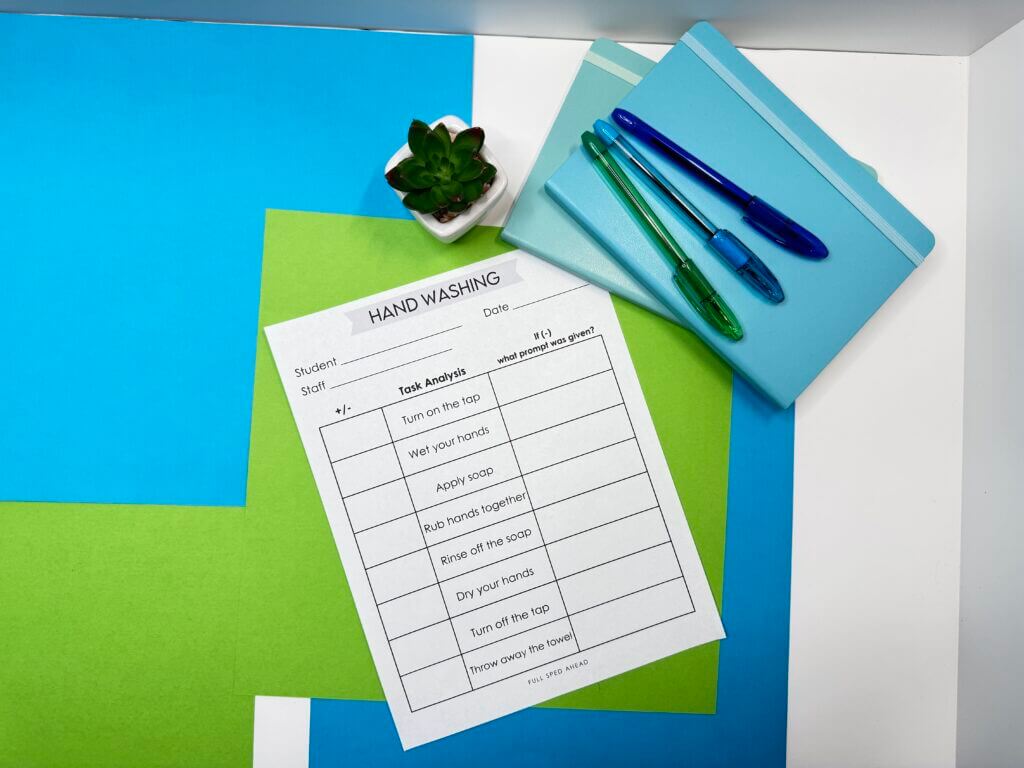
A clear hand washing task analysis helps students learn each step in a predictable and consistent way. This free resource makes it easier to teach, practice, and reinforce proper hand washing skills.
Hand washing includes multiple steps that can feel overwhelming without structure. Breaking the routine into simple, visual steps helps students understand what to do and what comes next. For instance, using picture schedules or step-by-step checklists can further enhance their learning experience. Incorporating fun and engaging methods, like songs or rhymes, can also make hand washing a more enjoyable and memorable activity for students.
A task analysis supports:
A task analysis breaks a skill into small, teachable steps. Each step is taught and practiced until the full routine can be completed independently. This approach not only aids in mastery but also helps students develop critical thinking skills as they learn to sequence actions logically. By understanding the ‘why’ behind each step, students can internalize the importance of hand washing beyond just following instructions.
For hand washing, this means:
This free resource is designed for special education classrooms and life skills instruction. It works well for early learners, autistic students, and students working on functional independence. The task analysis not only aids in hygiene education but also serves as a springboard for discussions about health-related topics, helping students understand why these practices matter in their daily lives.
Inside the download, you’ll find:
This hand washing task analysis is flexible and easy to implement. It can be used during direct instruction or embedded into daily routines.
Try using it:
Effective use of this resource involves ongoing practice and reinforcement. Teachers can enhance learning by integrating hand washing into various subjects, such as science, where students can explore the concept of germs and bacteria. This cross-curricular approach can make the learning experience richer and more meaningful.
Furthermore, educators can encourage students to set personal goals related to hand washing, such as remembering to wash their hands before eating or after using the restroom. Celebrating these achievements can motivate students and reinforce the importance of hygiene in their routines.
Teaching hand washing goes beyond hygiene. It also supports broader functional and IEP-related skills.
This resource helps students practice:
Teaching hand washing goes beyond hygiene. It also supports broader functional and IEP-related skills, including self-regulation and social interactions. For instance, students learn to wait their turn for washing hands, which helps develop patience and social skills. This task analysis provides an opportunity to discuss feelings about cleanliness and personal space, fostering a deeper understanding of health and social etiquette.
Additionally, it’s beneficial to involve families in this learning process. Providing parents with resources and tips on how to reinforce hand washing at home can create a supportive environment that extends beyond the classroom. Encouraging family participation not only strengthens the skill but also promotes a community approach to hygiene and health.
Task analysis removes guesswork for students. When expectations are clear, students feel more confident and capable.
Over time, consistent use leads to:
If you are looking for a simple, effective way to teach hand washing in your special education classroom, this free resource is ready to use.
👉 Download the FREE Hand Washing Task Analysis here:
https://www.fullspedahead.com/product/washing-hands-task-analysis/
This resource is essential for any life skills program focused on independence, routines, and functional learning. By using this hand washing task analysis, you can ensure that students are equipped with the necessary skills to maintain their health and hygiene effectively.
