Planning Meaningful Classroom Assistant Training Sessions
Classroom assistants are the backbone of many special education classrooms. A classroom assistant provides essential support for students, help manage routines, and ensure that individualized

Classroom assistants are the backbone of many special education classrooms. A classroom assistant provides essential support for students, help manage routines, and ensure that individualized

In this blog post, we’ll explore the five must-have sections in your para training binder and how they can transform your classroom into a more
Paraprofessionals are invaluable members of any special education classroom. That is why you need a paraprofessional training course! They work closely with students to provide
As a special education teacher, you wear many hats: educator, advocate, data analyst, and sometimes even behavior specialist. Paraprofessionals play an essential role in creating

Educators often look to instructional research, such as the science of reading to improve learner outcomes. In addition, other instructional conditions, such as the power of collaboration in education, shape a school’s culture by including contributions by administrators, paraprofessionals, and families.
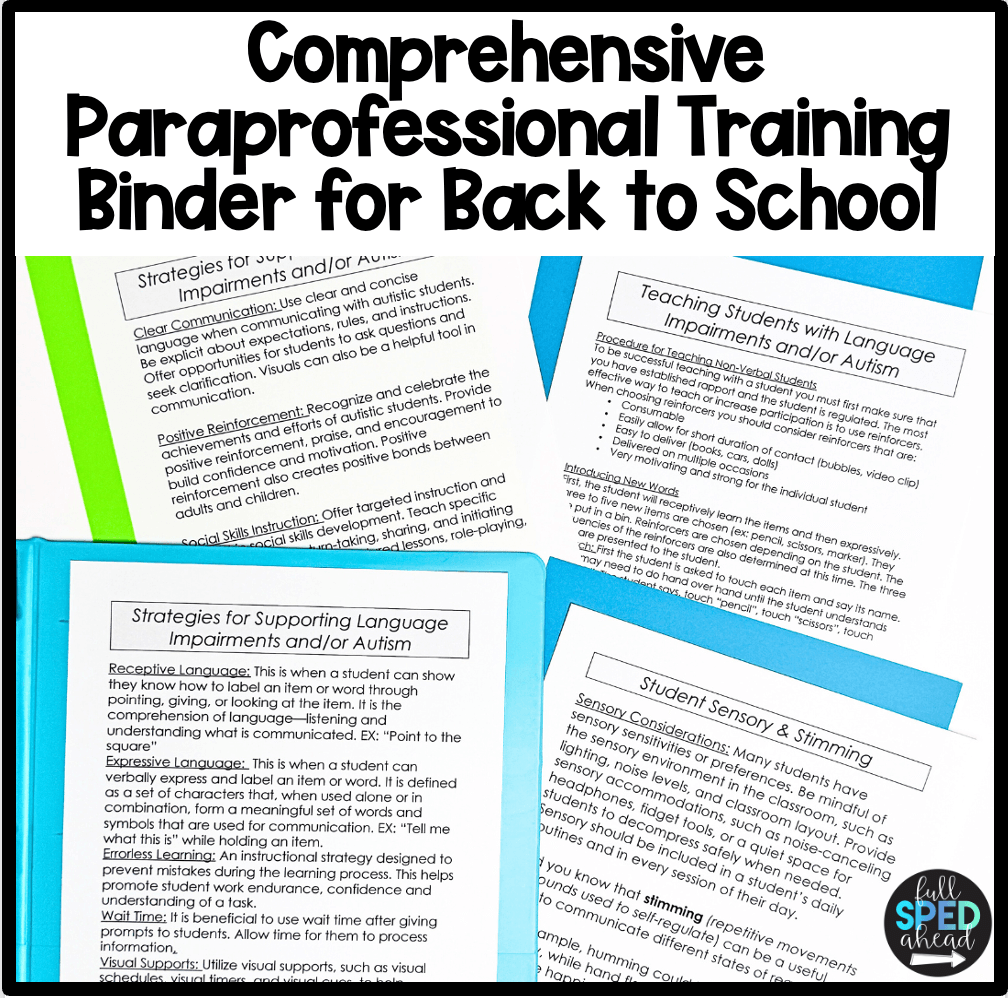
In the realm of special education, the collaboration between teachers and paraprofessionals (also known as classroom assistants or paraeducators) is critical for creating an effective and supportive learning environment for students. However, to ensure this partnership is successful, it is essential that clear expectations, routines, and responsibilities are established from the start. One indispensable tool that can facilitate this process is a Paraprofessional Training Binder. This blog post will highlight the importance of having a comprehensive binder and how it can assist special education teachers in setting expectations and routines for their paraprofessionals.
