
Writing is a fundamental skill that empowers students and adults to express themselves, communicate effectively, and engage with the world around them. In special education, the writing process can sometimes feel overwhelming, especially for those with communication challenges or fine motor delays. This is where predictable chart writing, a strategy that builds confidence, fosters independence, and opens the door to meaningful literacy experiences.
Predictable chart writing is a structured, accessible, and engaging approach to teaching foundational writing skills. By providing consistent sentence starters, visual supports, and opportunities for collaborative writing, this method meets students where they are and helps them succeed. Let’s explore how predictable chart writing with adults and students works, why it’s so effective, and how you can use it to transform writing instruction in your special education classroom.
Grab 4 weeks of lessons for PCW
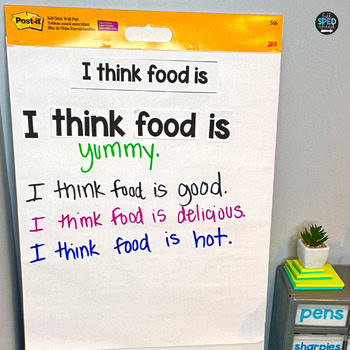
Predictable chart writing is a shared writing strategy where teachers and students collaborate to create a chart of simple, repetitive sentences based on a common theme or topic. The process typically involves providing a sentence starter, which students complete with their own words or ideas. For example:
Each student contributes their sentence, which is written on the chart and read aloud together as a class. Over the course of the week, the chart is revisited and extended through various activities, such as cutting sentences apart and rebuilding them, illustrating sentences, or creating a class book.
The Benefits of Predictable Chart Writing
1. Builds Confidence
For many students, writing can feel intimidating, especially if they struggle with spelling, grammar, or generating ideas. Predictable chart writing reduces this pressure by providing a structured framework that guides students through the process. The repetitive nature of the sentences ensures that all students can contribute successfully, building their confidence as writers.
2. Promotes Independence
Predictable chart writing fosters independence by encouraging students to complete their sentences on their own, whether verbally, in writing, or using alternative communication methods such as AAC devices. Over time, students become more comfortable taking ownership of their writing and generating their ideas within the provided structure.
3. Supports Language Development
This strategy is especially beneficial for students with language delays or nonverbal students. Predictable chart writing provides opportunities for students to practice vocabulary, sentence structure, and communication skills in a supportive environment. Pairing the activity with visual supports or AAC tools can further enhance language development.
AAC and Predictable Chart Writing Strategies
4. Encourages Collaboration
By working together to create a chart, students learn to share ideas, listen to their peers, and take turns. This collaborative aspect fosters a sense of community and helps students develop social-emotional skills.
5. Engages Students in Literacy
Predictable chart writing makes the writing process fun and engaging. Students enjoy seeing their sentences displayed on the chart, reading them aloud with their classmates, and participating in hands-on extension activities like cutting and pasting words to rebuild sentences.
How to Implement Predictable Chart Writing in Your Classroom
Step 1: Choose a Theme or Topic
Select a topic that is relevant and engaging for your students. This could be based on a current unit, a seasonal theme, or something of high interest, such as favorite foods or animals.
Step 2: Introduce the Sentence Starter
Write a simple, repetitive sentence starter on the board or chart paper. Model how to complete the sentence with your own example, and then invite each student to contribute their sentence. Write each sentence on the chart as students share.
Step 3: Read the Chart Together
After all the sentences are written, read the chart aloud as a class. This helps students see their contributions in print and reinforces the connection between spoken and written language.
Step 4: Incorporate Extension Activities
Throughout the week, revisit the chart through activities that build literacy skills, such as:
Unlocking Literacy Skills with Predictable Chart Writing Curriculum in Special Education
Predictable chart writing is inherently flexible and can be adapted to meet the needs of all learners. Here are some tips for making it accessible:
Predictable chart writing can easily be integrated into your existing literacy curriculum. It aligns with Common Core State Standards and IEP goals related to writing, communication, and language development. This strategy is particularly effective for teaching foundational skills such as:
For a comprehensive and ready-to-use resource, check out my Predictable Chart Writing Curriculum for Special Education. This curriculum includes everything you need to implement predictable chart writing in your classroom, from sentence starters and visual supports to extension activities.
Predictable chart writing is a game-changer for special education classrooms. By breaking the writing process into manageable steps and providing consistent support, this strategy builds confidence, independence, and essential literacy skills in students of all abilities. Whether you’re working with emerging writers or nonverbal students, predictable chart writing offers a meaningful and accessible way to engage your learners in the writing process.
Ready to bring predictable chart writing to your classroom? Start with topics your students love, incorporate visual supports, and watch as they gain confidence and independence in their writing.
