How to Adapt Predictable Chart Writing for AAC Users
The good news is that you can adapt predictable chart writing for AAC users so they can participate fully and build communication and literacy skills.

The good news is that you can adapt predictable chart writing for AAC users so they can participate fully and build communication and literacy skills.

For many special education teachers, bringing writing instruction into the classroom can feel overwhelming. Students may be at vastly different ability levels, some may be

Introduction I’m excited to introduce this week’s guest blogger – Ashley from Spedtacular Days to talk about core vocabulary words in the special education classroom.

Let’s talk about the ever growing topic of picture supported text. When teaching students with Complex Communication Needs (CCN), ensuring our instruction intent matches the instruction’s impact on the student is essential. When intent and impact align, learning takes off. When intent and impact do not align, learning can stagnate.

Predictable Chart Writing (PCW) is one such tool, a dynamic approach to fostering foundational writing skills, even for nonverbal students who use Augmentative and Alternative Communication (AAC) to communicate. In this blog, we will explore Writing with Predictable Chart, its benefits, and how special education teachers can harness its potential in their classrooms.
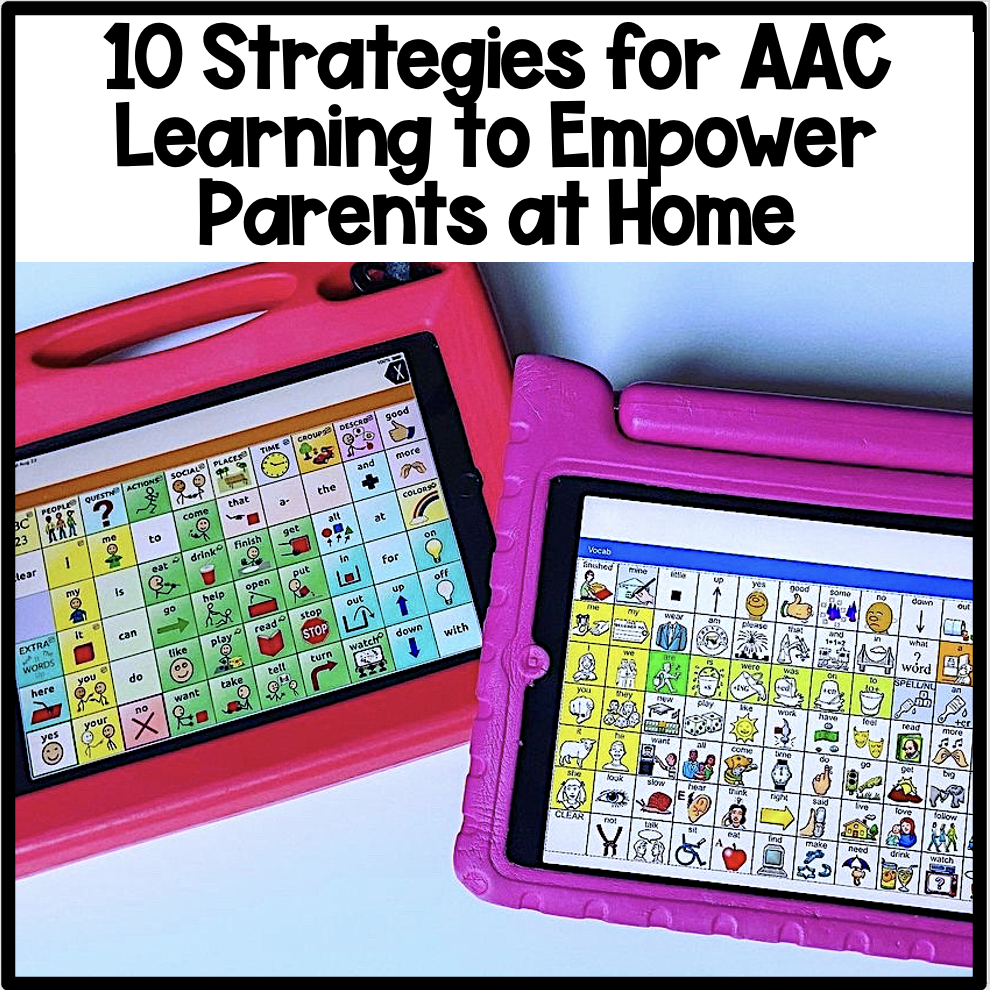
Augmentative and Alternative Communication (AAC) systems play a vital role in helping individuals with communication challenges express themselves effectively. Special education teachers recognize the importance of not only implementing AAC in the classroom but also fostering AAC learning use at home. By empowering parents to support AAC, teachers can enhance a child’s communication skills and overall development. In this blog post, we’ll explore how special education teachers can collaborate with parents to facilitate AAC at home.
