
Digital data collection methods is one of the most important responsibilities in special education. Accurate progress monitoring ensures IEP goals are being implemented effectively and that student growth is clearly documented. Yet for many teachers, paper data sheets become overwhelming, inconsistent, and difficult to manage.
If you have ever felt buried in clipboards, binders, or loose data sheets, you are not alone. That is why digital data collection methods for special education has become such a powerful solution.
The Digital Data Collection Methods Guide was created to help special education teachers confidently set up Google Forms for tracking IEP goals, monitoring progress, organizing data, and protecting confidential information. This free guide walks you step by step through building a streamlined, efficient system that actually works in real classrooms.
IEP compliance requires accurate and ongoing progress monitoring. However, traditional paper systems can lead to lost data, inconsistent tracking, and added stress during reporting periods.
Using digital tools for IEP data tracking helps teachers:
When data collection becomes efficient, teachers can spend more time teaching and less time managing paperwork.
Google Forms is a free tool offered through Google that can be used to create customized digital data sheets. When set up properly, it becomes one of the most powerful progress monitoring tools available to special education teachers.
With Google Forms, you can:
This system works for academic goals, functional life skills goals, speech goals, behavior tracking, and vocational data.
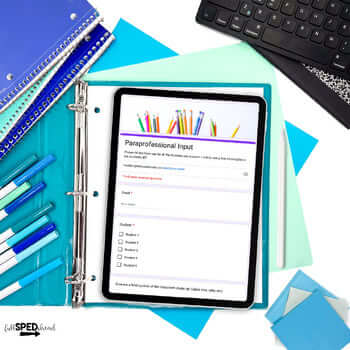
The Digital Data Collection Methods Guide is designed to remove confusion and give you clear, actionable steps. It is written specifically for special education teachers who want practical systems, not complicated tech tutorials.
Inside the free guide, you will learn:
The guide breaks down the process so even teachers who are new to digital tools can implement it confidently.
One of the most time saving strategies included in the guide is using QR codes. Instead of searching for forms during instruction, staff can scan a QR code and instantly open the correct data sheet.
QR codes can be:
This makes it easier for paraprofessionals and related service providers to collect consistent data throughout the day.
When using digital data collection methods and tools, protecting student confidentiality is essential. The guide includes clear strategies for maintaining secure and FERPA compliant systems.
You will learn how to:
With the right setup, digital systems can be both efficient and secure.
Walking into an IEP meeting with clear, organized data changes the entire experience. Instead of scrambling to interpret paper sheets, you can quickly review trends and provide clear progress summaries.
Digital data systems help you:
Strong documentation builds confidence and credibility.
Special education teachers manage many responsibilities. A clear digital data collection system reduces daily stress and decision fatigue.
When your system is organized, you can:
Digital systems provide clarity and structure.
The Digital Data Collection Guide is ideal for:
Whether you are just starting or looking to refine your current system, this guide provides a practical roadmap.
If you are ready to simplify progress monitoring and strengthen your IEP data systems, this free resource will help you get started.
This guide is perfect for special education teachers who want clearer systems, stronger documentation, and more confidence in their data collection process.

